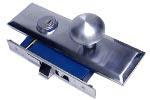
Our doors serve as entrances to our homes and offices. They may also provide access to strangers, criminals and offenders. So how do we secure our doors and prevent intrusions by these people? This is the sole of purpose of door locks. They keep us and our properties safe and protected.
The standard type of doorknob is easy to manipulate and provides weak protection. A deadbolt lock, however, provides good protection against robbers who try to break through our doors and properties.
There are three types of deadbolt locks in the market. The first type is the single cylinder deadbolt lock. It has a key cylinder on one side and a knob on the other side. The second type of deadbolt lock is the double cylinder lock. Both of its sides have a key cylinder. It has no knobs and the user needs a key to open it. The last type of deadbolt lock is the keyless deadbolt lock. There are two methods of unlocking it.
The method of lock picking involves opening the door lock with a locking tool kit. A basic kit contains a screwdriver or other types of tension wrench and a lock pin, which is a long and thin piece of metal that is curved at one end. In cases of emergencies, a hairpin may substitute for the lock pin. A professional kit, on the other hand, contains several types of tension wrenches in varying in sizes and shapes and lock pins with different dimensions. It may also contain a pick gun which is an instrument that vibrates and push several lock pins at the same time.
To open the keyless deadbolt lock, the user first inserts the tension wrench in the keyhole and turns the cylinder in a way similar to unlocking a standard lock with a key. The lock pin is inserted and lifted slowly upward. Upon reaching normal position, he will hear a click that will signify that the deadbolt lock is open. Racking is another technique of opening the keyless deadbolt lock. It has a lower level of accuracy compared to lock picking. A special instrument called a rake is inserted to the lock and pushed all the way to the back of the key cylinder. It is pulled out in a brisk manner to hit all pins on its way out. The cylinder is rotated with the use of a tension wrench.
The master lock is considered as one of the hardest locks to be opened. It provides a high level of security. The master lock was invented by Henry Soref in 1921, who thought of producing locks using several layers of laminated steel. The master lock has the same picking system as the other types of door locks but its production requires excellent locksmith skills.
More information on locks and lock picking techniques can be seen in books available in the market. There are also videos and CDs that provide good illustration.